How Custom Embroidery Builds a Stronger Brand Image

Mar 14, 2024 | Embroidery

Your employees walk into a client meeting wearing polo shirts with your company logo. One version has a screen-printed logo that’s starting to crack at the edges. The other has a clean, stitched embroidered logo with crisp lines and rich color. Which one makes the better impression?

That’s not a trick question. The way your team looks directly affects how customers perceive your business, and custom embroidery branding gives you a level of polish that printed logos simply can’t match. At RiverCity Screenprinting & Embroidery in San Marcos, TX, we’ve seen firsthand how embroidered uniforms shape brand image for businesses across Central Texas.

Why Embroidery Changes Brand Perception

There’s a reason high-end brands, country clubs, polo teams, and university athletics programs all rely on embroidery for their logos. Stitched designs communicate quality. When a customer sees the texture and dimension of an embroidered logo on a polo shirt or jacket, they register something different than they would from a flat printed graphic. The tactile quality of thread work tells people you care about details, and that perception carries over to how they view your products and services.

Think about it from a customer acquisition standpoint. Two landscaping companies show up to give a quote. One crew wears plain t-shirts. The other wears matching embroidered workwear with the company name and logo stitched on the chest. The second company looks organized, professional, and established. That impression happens before anyone says a word.

Embroidery brand perception works because it taps into associations people already carry. We’ve all seen the embroidered patches on letterman jackets, the stitched crests on golf club apparel, the monogrammed uniforms at upscale restaurants. These connections between embroidery and quality run deep, and your business gets to benefit from them.

Embroidery vs. Printed Logos: Durability That Matters

The most practical argument for custom embroidery over screen printing comes down to how long the branding actually lasts. Printed logos eventually crack, peel, and fade. After a few dozen wash cycles, that sharp logo starts looking worn out. And here’s the problem: customers notice. If your staff is wearing shirts with deteriorating graphics, it can leave the impression of a struggling or careless business.

Embroidered designs don’t have that problem. The logo is stitched directly into the fabric with thread, so it holds up through hundreds of washes without losing definition or color. For embroidered workwear that gets worn daily (think construction crews, restaurant staff, delivery drivers), this durability isn’t just nice to have. It’s essential.

The math works out too. You might pay slightly more upfront for embroidery vs. printed logo options, but you’re not replacing faded shirts every few months. Over a year or two, premium brand embroidery actually costs less per wear than printed alternatives.

What Makes Professional Embroidery Different

Not all embroidery is created equal. The difference between a clean, professional result and a messy one comes down to the technical details that most people never think about.

Thread Selection

The type of thread affects both the look and the longevity of the finished piece. Polyester thread is the industry standard for commercial embroidery because it holds color well, resists UV fading, and won’t shrink in the wash. Cotton thread gives a softer, more matte finish that works well for vintage or understated designs. Metallic threads add a reflective, high-end look, but they’re trickier to work with since they can fray or break during stitching if the machine tension isn’t set correctly.

At RiverCity, we help clients pick the right thread type for their specific project. A corporate law firm’s embroidered polo shirts need a different feel than a brewery’s trucker hats.

Stabilizers

This is something most people have never heard of, but stabilizers are critical to a quality result. They’re sheets of material placed behind the fabric during stitching to prevent bunching, shifting, or distortion.

Different fabrics need different stabilizers. Heavyweight fabrics like canvas or denim use a sturdy cut-away stabilizer that stays permanently behind the design. Standard fabrics like cotton polos and button-downs work well with tear-away stabilizers that get removed after stitching. Sheer or lightweight fabrics need water-soluble stabilizers that dissolve completely, so nothing shows through the material. Knit fabrics like t-shirts require medium-weight tear-away options because the stretch of the knit makes the fabric prone to shifting under the needle.

Getting the stabilizer wrong can ruin an otherwise good design. The fabric puckers, the lines waver, and the whole thing looks amateur. Our technicians match the right stabilizer to each fabric and stitch density so the finished product looks clean.

Machine Technology

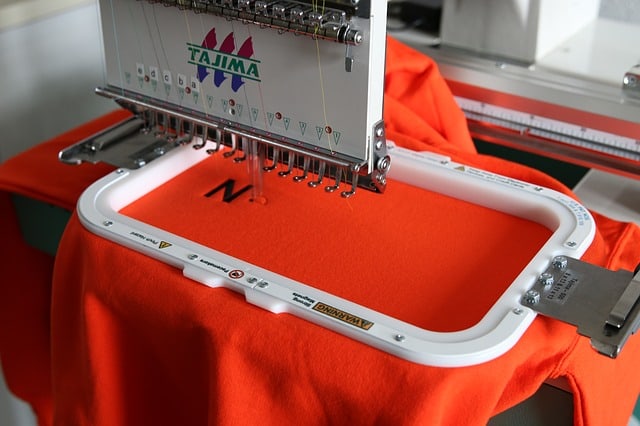
Professional embroidery business operations use multi-needle commercial machines, not the single-needle home units you’d find at a craft store. Multi-needle machines can hold multiple thread colors simultaneously, which means faster production and more consistent results across large orders. When you need 200 embroidered polo shirts for a company rollout, machine capability matters.

The design itself starts as a digital file that gets converted into a stitch program telling the machine exactly where to place each stitch, how dense to make the fill, and what sequence to use for color changes. This digitization step is where a lot of quality control happens. A well-digitized design translates cleanly to fabric. A poorly digitized one results in gaps, thread breaks, and blurry details.

Design Placement and Its Impact

Where you put the embroidery on a garment matters just as much as the design itself. The most common placements include:

  • Left chest: The standard for corporate embroidery services and professional uniforms. Clean, recognizable, and visible during handshakes and meetings.
  • Right chest: Often used for employee names or secondary branding.
  • Sleeves: Popular for flags, secondary logos, or certification badges.
  • Back yoke or full back: Works for event staff, warehouse teams, or situations where you need visibility from behind.
  • Caps and beanies: Front-center placement puts your logo at eye level during face-to-face interactions.

Strategic placement depends on how and where the garment will be seen. A delivery driver benefits from a large back logo because customers see them walking away. An account manager at a trade show needs a sharp left-chest logo that’s visible during conversations. We work with clients to figure out what makes sense for their specific situation.

Building Team Unity Through Embroidered Uniforms

Custom uniforms with embroidery do more than impress customers. They change how your own team feels about the company. There’s a real psychological effect when employees put on matching, well-made uniforms with a professional logo. It creates a sense of belonging, of being part of something organized and legitimate.

This matters for businesses that have public-facing teams. Restaurant staff, retail associates, event coordinators, service technicians: when your people look unified, customers feel more confident in the service they’re about to receive. It removes ambiguity about who works there and who doesn’t. It signals that the company has its act together.

Country clubs, sports organizations, and event production companies have understood this for decades. The bold appearance of embroidery paired with consistent design across a team creates a visual identity that’s impossible to miss. Even something as simple as matching embroidered caps for your crew at a community event can set your business apart from everyone else at the table.

Color and Design Choices That Work

Getting the color palette right is more important than most people realize. Your embroidered logo needs to work on the specific garment color you’re choosing. A dark navy logo disappears on a black polo. A white logo on a cream shirt looks washed out.

Here are some practical guidelines:

High contrast wins. Light thread on dark fabric (or vice versa) ensures your logo pops.

Match your brand colors exactly. Thread manufacturers offer hundreds of colors, and a good embroidery shop will match your Pantone values as closely as possible.

Simplify complex logos. Very fine details (thin lines, tiny text, complex gradients) don’t always translate well to thread. A slightly simplified version of your logo often looks better embroidered than a literal reproduction.

Consider the garment. A monochromatic stitch design can look sleek and upscale on a structured blazer, while a multi-color logo works great on casual polos and caps.

We keep thread samples on hand so clients can see exactly how their colors will look stitched out before we run a full order. It’s a small step that prevents surprises.

Beyond Embroidery: Complementary Branding Tools

Embroidery is powerful, but it’s not the only tool in your branding kit. For some applications, screen printing makes more sense. Large, full-color graphics on t-shirts for a 5K race or a company picnic? Screen printing handles that better and at a lower per-unit cost for high quantities.

Promotional products round out your brand presence too. Custom embroidered merchandise like caps and bags work alongside printed items like notebooks, drinkware, and tech accessories. The key is creating a consistent look across everything your company puts out there. When your embroidered polo shirts match the same logo on your printed tote bags and your branded pens, people start recognizing your company everywhere they look.

At RiverCity, we handle screen printing and promotional products alongside embroidery, which means your branding stays consistent across all of it. No chasing down three different vendors with three different versions of your logo.

Choosing the Right Items for Embroidery

Not everything should be embroidered, and knowing which items work best helps you spend your budget wisely.

Best for embroidery: – Polo shirts and button-downs (the classic embroidered polo shirts company choice) – Caps, beanies, and visors – Jackets, vests, and outerwear – Tote bags and backpacks – Aprons and chef coats

Better for screen printing: – Event t-shirts with large, colorful designs – Athletic jerseys with numbers – Items needing photographic or gradient reproduction

The general rule: if the item is something your team or customers will wear repeatedly in professional settings, embroidery is the right move. If it’s a high-volume, short-term promotional piece, printing probably makes more sense.

Frequently Asked Questions

Why does embroidered branding cost more than printed logos?

Embroidery requires specialized equipment, thread, stabilizers, and digitization of your design into stitch files. While the upfront cost is higher, embroidered logos last much longer than printed ones, making them more cost-effective over time for professional uniforms.

How long do embroidered logos last compared to printed ones?

Embroidered designs can withstand hundreds of wash cycles without fading or cracking, while printed logos often show wear after a few dozen washes. For workwear and professional uniforms, embroidery provides significantly better durability.

Can any logo be embroidered?

Most logos can be embroidered, but some may need simplification. Very fine details, thin lines, and complex gradients don’t translate well to thread. We can help adapt complex logos for embroidery while maintaining their recognizability.

What’s the best placement for embroidered logos on professional attire?

Left chest placement is standard for corporate uniforms because it’s visible during handshakes and meetings. The best placement depends on how the garment will be worn and where visibility matters most for your specific business needs.

How do I maintain embroidered uniforms to preserve the branding?

Turn garments inside out before washing, use cold water, and avoid bleach. Air drying is best, but low-heat tumble drying is acceptable. Proper care keeps embroidered logos looking professional for years.

Get Started With RiverCity Screenprinting & Embroidery

You might be outfitting a team of five or five hundred, but custom embroidery gives your brand a professional edge that printed alternatives can’t match. From embroidered workwear for your field crews to sharp polo shirts for your office staff, the right embroidery turns everyday clothing into a branding tool that works for you every single day.

RiverCity Screenprinting & Embroidery has been helping businesses across the San Marcos, Austin, and San Antonio corridor build their brand through quality custom work. We handle everything from logo digitization to thread selection to final stitching, and we’re happy to walk you through the options for your specific project.

Ready to put your logo on something that lasts? Browse our embroidery services or contact us to discuss your branding needs.