

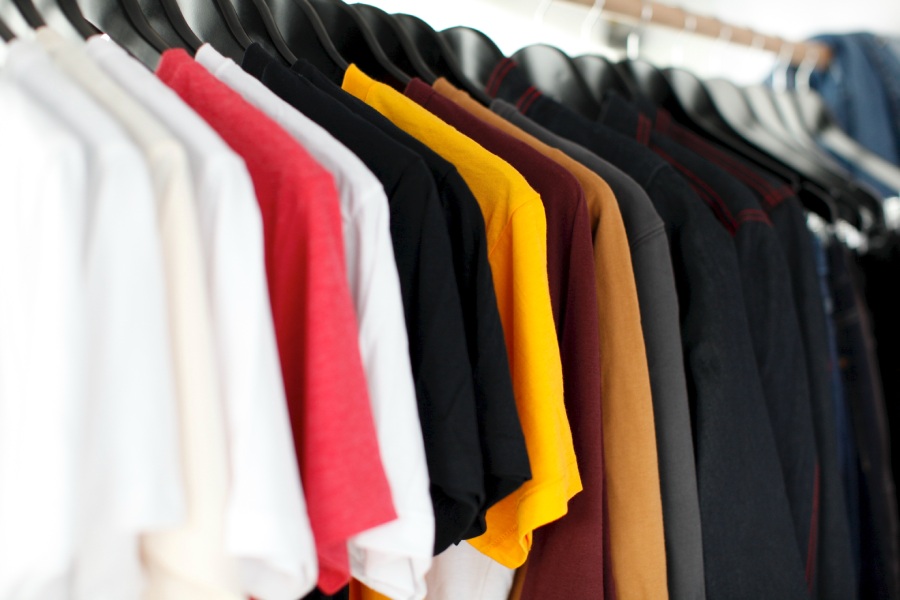
The blank t-shirt you pick matters more than most people realize. Your design might be perfect, but print it on a stiff, boxy shirt and nobody’s going to wear it. Print it on something too thin and the ink shows through or the shirt falls apart after five washes.
We’ve been screen printing on every major blank brand since 1978. After four decades of running tens of thousands of shirts through our presses, we have strong opinions about which blanks work best for different situations. Here’s what we’ve learned.
Why the Blank Matters as Much as the Print
A screen-printed design is only as good as the surface it sits on. Fabric weight, fiber type, and knit construction all affect how ink lays down, how colors pop, and how the finished product holds up over time.
Heavier shirts (6+ oz) give you a stiff, structured feel and a solid ink base. Lighter shirts (4.2-4.5 oz) feel softer and drape better but need more careful ink application. Ringspun cotton produces a smoother print surface than open-end cotton because the fibers are combed and twisted tighter, leaving fewer bumps and irregularities on the fabric face.
The fit matters too. A “retail fit” (sometimes called fashion fit) runs slimmer through the body with shorter sleeves. A “traditional fit” is boxed and roomy. Your audience determines which one makes sense.
Top Blank T-Shirt Brands Compared
Bella+Canvas 3001
The Bella+Canvas 3001 is the most popular retail-fit blank on the market right now, and for good reason. It’s a 4.2 oz ringspun cotton shirt with a soft, smooth hand feel. The fabric is pre-shrunk and side-seamed (no twisting after washing), and the fit is slim without being tight.
Best for: Retail merch lines, brand merchandise, events where you want people to actually keep wearing the shirt.
Print quality: Excellent. The smooth ringspun surface holds fine detail well, and the lighter weight means ink sits on top rather than sinking into thick fibers. Water-based and discharge inks look particularly good on this shirt.
Price tier: Mid-range to upper ($4-6 per blank depending on color and quantity).
Watch out for: The slim fit can run small for people used to traditional cuts. Size up if you’re ordering for a mixed group. Check out our sizing guide before placing your order.
Next Level 6210
The Next Level 6210 (CVC crew) is another retail-fit favorite. It’s a 4.3 oz shirt made from a cotton/polyester blend (60/40), which gives it that broken-in softness right out of the box. The CVC (chief value cotton) blend also means less shrinkage than 100% cotton options.
Best for: Premium brand merchandise, subscription box items, apparel lines where softness is the top priority.
Print quality: Very good. The poly content can affect ink adhesion slightly compared to 100% cotton, so your printer needs to adjust ink formulation. The trade-off is a buttery soft hand feel that customers love.
Price tier: Mid-range ($3.50-5.50 per blank).
Watch out for: Heathered and blended colors are this brand’s strength. If you need bright, solid base colors, Bella+Canvas might have a wider selection.
Gildan 64000 (Softstyle)
Gildan gets a bad reputation from their older, stiffer models, but the 64000 Softstyle is a different shirt entirely. It’s a 4.5 oz ringspun cotton tee with a semi-fitted cut that bridges the gap between boxy and slim. The price point is where Gildan really shines.
Best for: Events, fundraisers, large orders where budget matters, employee giveaways, anything over 100 pieces where per-unit cost adds up fast.
Print quality: Good. The ringspun cotton takes ink well and holds up through washing. It’s not as silky smooth as Bella+Canvas, but the print quality difference is minimal for most designs.
Price tier: Budget-friendly ($2.50-4 per blank). This is where the Gildan Softstyle earns its spot. On a 500-piece order, the savings over premium blanks can be $1,000+.
Watch out for: The fit is a touch wider than true retail-fit shirts. Color selection is solid but not as deep as Bella+Canvas.
Comfort Colors 1717
Comfort Colors shirts are garment-dyed, which gives them that lived-in, vintage look and feel from day one. The 6.1 oz ringspun cotton is thick and substantial, and the dyeing process creates subtle color variations that make each shirt feel slightly unique.
Best for: Greek life, outdoor brands, vacation/destination merch, brewery and restaurant shirts, anything that benefits from a laid-back aesthetic.
Print quality: Different from standard blanks. Because the shirts are garment-dyed, the fabric surface has a slightly textured, washed feel. Plastisol inks work well but water-based prints can look washed out. Many printers prefer using higher-opacity inks on Comfort Colors. The vintage look of the blank complements certain design styles really well.
Price tier: Upper mid-range ($5-8 per blank). The garment dyeing process adds cost.
Watch out for: Comfort Colors shirts run big and boxy. They shrink more than pre-shrunk alternatives, so factor that into your sizing decisions. The color palette leans toward muted, earthy tones rather than bright primaries.
Hanes Beefy-T (5180)
The Hanes Beefy-T is the heavyweight workhorse. At 6.1 oz of 100% cotton with a traditional cut, this is the shirt your dad wore in the 90s. It’s thick, durable, and built to last.
Best for: Work uniforms, construction crews, industrial settings, anyone who needs a shirt that can take daily abuse and still look decent after 100 washes.
Print quality: Solid. The heavier fabric creates a stable print surface and absorbs ink well. Fine detail won’t show quite as crisply as on ringspun alternatives because of the open-end cotton construction, but bold graphics and text look great.
Price tier: Budget-friendly ($3-4.50 per blank).
Watch out for: The fit is boxy and traditional. If you’re outfitting a young office staff, they’ll probably prefer something with a modern cut.
Ringspun Cotton vs. Open-End Cotton
This is the single biggest factor in how a blank feels and prints. Ringspun cotton fibers are continuously twisted and thinned, producing a smoother, softer yarn. Open-end cotton uses shorter fibers spun together more quickly. It’s cheaper to produce but results in a coarser, rougher fabric.
For printing, ringspun gives you a smoother canvas. Fine lines and small text come out cleaner on the smoother surface. Open-end cotton works fine for bold, simple designs but struggles with intricate artwork.
If the budget allows it, go ringspun. Your customers will feel the difference the second they put the shirt on.
Tri-Blend vs. 100% Cotton
Tri-blend shirts (typically 50% polyester, 25% cotton, 25% rayon) are the softest option on the market. They drape well, resist wrinkles, and have a heathered appearance that looks premium.
The catch: tri-blends require more specialized printing. The polyester content can cause dye migration (where the fabric dye bleeds through the ink), and standard plastisol formulations don’t always bond well. You’ll need a printer who knows how to handle poly blends, or you’ll end up with cracked, faded prints after a few washes. Our team handles tri-blend printing regularly and adjusts our screen printing process accordingly.
100% cotton is the safest choice for bold, long-lasting prints. It takes ink predictably, works with every print method, and costs less.
Picking the Right Blank by Use Case
Event giveaways and fundraisers: Gildan 64000 Softstyle. Good quality at the lowest cost per unit. When you’re ordering 200+ shirts for a 5K or charity event, the savings add up without sacrificing wearability.
Retail merchandise and brand apparel: Bella+Canvas 3001 or Next Level 6210. These are the blanks that people actually want to wear as regular clothes. If you’re selling shirts (not giving them away), invest in the blank.
Employee uniforms: Hanes Beefy-T or Gildan Softstyle. Durability matters more than fashion. These hold up to daily wear and frequent washing, and the traditional fit accommodates more body types.
Premium or boutique brands: Next Level 6210 in CVC or Bella+Canvas 3001. The softness and fit justify the higher price point. Pair with water-based or discharge printing for that soft-hand, premium feel.
Greek life, camps, and outdoor events: Comfort Colors 1717. The garment-dyed look is practically the uniform for sororities, fraternities, and summer camps. Nothing else captures that laid-back vibe the same way.
How Fabric Affects Print Quality
Beyond the ringspun vs. open-end distinction, a few other fabric characteristics affect your finished product:
Color: Dark shirts require a white underbase layer before your design colors go down. This adds thickness and cost. If you can work with light-colored blanks, you’ll get softer prints and save money.
Fabric blend: As mentioned, polyester content above 20-25% requires adjusted ink formulations to prevent dye migration and ensure adhesion. Let your printer know the exact blend before production starts.
Weight: Lighter shirts (under 5 oz) show ink texture more clearly. Heavier shirts absorb ink more and create a more muted finish. Neither is better or worse, but it’s worth knowing what to expect.
Pre-shrunk vs. untreated: Pre-shrunk blanks maintain print registration and sizing after washing. Untreated shirts can shift, which may distort prints slightly over time.
Frequently Asked Questions
Which blank t-shirt brand offers the best value for screen printing?
Gildan 64000 Softstyle provides the best balance of quality and cost for most screen printing projects. At RiverCity Screenprinting, we see this blank work well for fundraisers, corporate events, and large promotional orders where budget matters.
How does fabric weight affect screen printing results?
Heavier fabrics (6+ oz) create a more stable print surface and absorb ink deeply, while lighter fabrics (4.2-4.5 oz) show finer detail and allow ink to sit on top for sharper graphics. Your design complexity should guide the fabric weight choice.
Can tri-blend shirts be screen printed successfully?
Yes, but tri-blends require specialized inks and techniques to prevent dye migration. RiverCity Screenprinting adjusts our ink formulations for polyester blends to ensure prints stay vibrant and don’t crack after washing.
What’s the difference between retail fit and traditional fit blank t-shirts?
Retail fit shirts run slimmer through the body with shorter sleeves, appealing to younger demographics and fashion-forward brands. Traditional fit offers a boxier, roomier cut that accommodates more body types and works well for uniforms or workwear.
Should I choose ringspun or open-end cotton for detailed designs?
Ringspun cotton provides a smoother print surface that captures fine details and small text better than open-end cotton. If your design includes intricate artwork or small fonts, the extra cost of ringspun blanks is worth the improved print quality.
Get Help Choosing the Right Blank
We stock all five of these brands (and dozens more) in our San Marcos facility. If you’re not sure which direction to go, request a quote and tell us about your project. We’ll recommend a blank based on your design, budget, quantity, and intended use.
You can also browse our custom clothing options or shop brands and products to get a feel for what’s available.
At RiverCity Screenprinting & Embroidery, we’ve spent 40+ years matching the right blanks to the right projects. The shirt isn’t just a canvas. It’s half the product.