You’ve got a design ready to go on custom apparel. Maybe it’s for a corporate event, a new clothing line, a sports team, or a family reunion. The next decision matters: how do you actually get that design onto the garment? Once you start looking into it, three methods come up over and over: screen printing, direct-to-garment (DTG), and heat transfer.
All three put a design on fabric, but they work very differently. Each one is better suited to certain types of projects, and picking the wrong one can affect what you pay, how the print looks, and how long it holds up.
Here’s a practical breakdown of each method and when it makes sense for your project.
The Classic Workhorse: Screen Printing
Screen printing has been the industry standard for decades, and it’s stuck around for a reason. It produces bright, long-lasting prints at a low per-piece cost, especially when you’re ordering in bulk.
How it works: A stencil (or “screen”) is created for each color in your design. Ink gets pushed through the stencil onto the garment, one color at a time. Once all the colors are down, the garment runs through a large dryer to cure the ink and permanently bond it to the fabric.
Best for:
- Bulk orders: Generally 24 pieces or more.
- Designs with limited colors: Works best with 1-4 color logos and graphics.
- Bright colors: Screen printing puts down a thick, opaque ink layer, so colors pop even on dark garments.
- Durability: A properly cured screen print will often outlast the shirt it’s on.
The bottom line: If you need a lot of shirts and your design doesn’t have a ton of colors, screen printing is almost always the most professional and affordable option.
The Digital Option: Direct-to-Garment (DTG)
DTG is a newer technology that works like an inkjet printer, but for fabric. It’s the go-to for full-color, highly detailed images.
How it works: A DTG printer sprays specialized water-based ink directly onto the garment. The fabric absorbs the ink, so the print feels soft to the touch. For dark garments, a white underbase gets printed first so the colors show up accurately.
Best for:
- Photographic and complex designs: DTG handles millions of colors, so it’s ideal for photos, detailed illustrations, and gradients.
- Small orders and one-offs: No screens to set up means minimal prep, which makes it practical for a single shirt or a small batch.
- Soft feel: The ink becomes part of the fabric. On light-colored garments, you can barely feel it.
The bottom line: If your design is a full-color photo or has a lot of detail and you only need a handful of pieces, DTG can deliver results that screen printing simply can’t.
The Flexible Choice: Heat Transfer
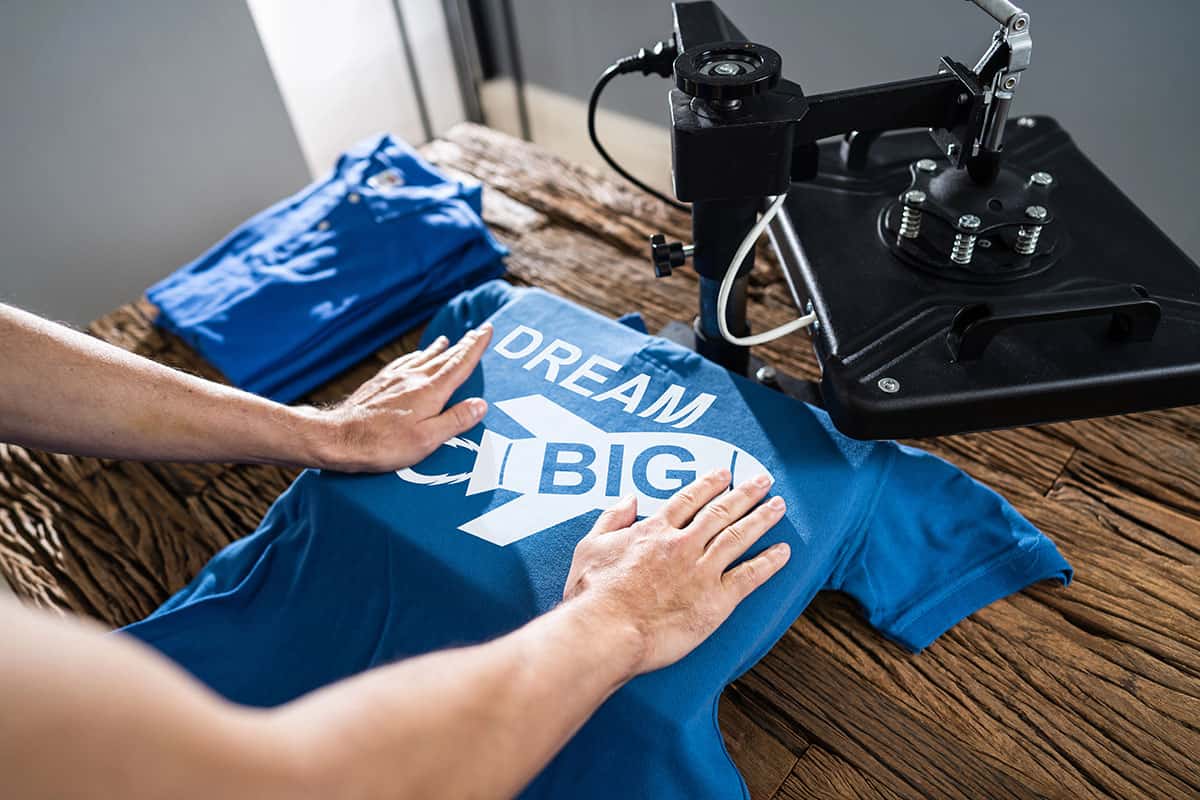
Heat transfer covers a range of methods that all involve printing a design onto a special material and then pressing it onto the garment with heat. The two main types are heat transfer vinyl (HTV) and printed transfers.
How it works:
- Heat Transfer Vinyl (HTV): A machine cuts your design from a sheet of colored vinyl. The extra vinyl is peeled away, and the design is pressed onto the shirt with a heat press. This is the standard method for names and numbers on sports jerseys.
- Printed Transfers: Your design is digitally printed onto special transfer paper, which is then heat-pressed onto the garment to move the ink from the paper to the fabric.
Best for:
- Personalization: Great for adding individual names and numbers to team uniforms.
- Difficult fabrics: HTV works on materials that don’t play well with screen printing or DTG, like polyester jackets, nylon bags, and hats.
- Small, simple orders: A solid option for basic text or shape-based designs in low quantities.
The bottom line: Heat transfer is the answer when you need personalization or when you’re decorating items made from fabrics the other methods can’t handle.
FAQs
Which method is the most cost-effective?
It depends on quantity and design complexity. For orders over 24 pieces with 1-4 colors, screen printing wins on cost. For small orders (1-12 pieces) with a full-color design, DTG is cheaper because there are no per-color setup fees.
Which print lasts the longest?
A properly cured screen print is generally the most durable option. It bonds strongly with the fabric and holds up through many washes without fading or cracking. Good DTG prints also last well, though they may fade slightly over time, similar to a store-bought graphic tee you’ve worn for years. Heat transfer durability depends on the quality of the materials used.
I have a full-color photograph I want on a shirt. What should I use?
DTG. It’s built for exactly this: reproducing the detail, gradients, and full color range of a photograph.
I need individual names and numbers on team jerseys. What’s the best option?
Heat transfer vinyl (HTV). It’s the standard for this kind of work. It produces crisp, bold text on each garment and sticks well to the polyester fabrics used in most athletic apparel.
Is DTG better than screen printing?
DTG is better for small orders and detailed artwork. Screen printing is more affordable and longer-lasting for larger runs with simpler designs.
What is the minimum order for screen printing?
Minimums vary by shop, but most screen printers have one because of setup costs. Larger orders bring the per-piece price down.
Can I mix printing methods in one order?
Sometimes, yes. For example, you might screen print the main logo and use heat transfer for individual names or numbers.
Which method is best for a small business launching merchandise?
For small initial runs with detailed designs, DTG is often the better fit. As demand grows, switching to screen printing can lower your per-unit cost.
Match the Method to Your Goals
Choosing between screen printing, DTG, and heat transfer isn’t about which one is “better.” It’s about which one fits your project. Think about your design’s complexity, how many garments you need, what fabric you’re printing on, and what you want to spend.
- Screen printing: Bulk orders, simple graphics, maximum durability.
- DTG: Photographic detail, unlimited colors, small quantities.
- Heat transfer: Personalization, team names and numbers, specialty fabrics.
If you’re not sure, talk to RCSE. Our team can look at your artwork, hear what you’re going for, and point you toward the right method.