Most customers think embroidery works like a printer – send your logo file and the machine embroiders it. That’s not how it works. Between your artwork and the finished embroidery lies a complex translation process called digitizing. Understanding this process helps you get better results and avoid common problems.
Table of Contents
What Embroidery Digitizing Actually Is
Embroidery digitizing converts your 2D design into machine-readable stitch instructions. It’s not simply “converting a file” or running your logo through software. A skilled digitizer analyzes your design and manually programs how each element gets embroidered – which stitch types to use, in what order, with what density, and how to handle fabric movement.
Think of digitizing as choreography for an embroidery machine. Your logo becomes a series of precise movements: where the needle penetrates fabric, when thread colors change, how stitches connect between design elements. The digitizer plans this entire sequence to produce clean, durable embroidery that matches your original design intent.
The final output is a stitch file (usually .DST format) containing thousands of individual needle coordinates. This file tells the embroidery machine exactly where to place each stitch, but it doesn’t contain your original artwork – just the movement instructions created during digitizing.
Poor digitizing creates registration problems, puckering, thread breaks, and embroidery that looks nothing like your original logo.
How the Digitizing Process Works
Professional digitizing involves multiple stitch types and techniques working together to create the finished design.
Underlay stitches provide the foundation. Before any visible stitching begins, underlay stitches stabilize the fabric and provide a foundation for subsequent stitches. Different underlay patterns work better for different fabric types – knits need more aggressive stabilization than woven fabrics.
Running stitches create outlines and fine details. Single-line stitches work well for text outlines, decorative borders, and design elements where minimal thread buildup is desired. Running stitches also connect different design areas without visible thread jumps.
Satin stitches produce smooth, filled areas. These back-and-forth stitches create the glossy appearance common in embroidered text and small design elements. Satin stitch density affects both appearance and durability – too dense and the fabric puckers, too sparse and the design looks thin.
Fill stitches handle large areas efficiently. Complex patterns of overlapping stitches fill large design areas while maintaining proper density. Fill patterns vary based on shape, size, and desired texture. Our digitizing team selects appropriate fill patterns that won’t cause excessive fabric distortion.
Push-pull compensation accounts for fabric movement. Embroidery stitches physically pull fabric, causing distortion. Experienced digitizers compensate by slightly oversizing elements that will compress during stitching. This ensures your finished embroidery matches the proportions of your original design.
Why Digitizing Quality Matters
Cheap digitizing creates expensive problems during production. Poor stitch file preparation shows up as obvious defects in your finished embroidery.
Puckering happens when stitch density is too high. Inexperienced digitizers often use excessive stitch counts, thinking more stitches equal better quality. Actually, proper density varies by fabric type, design size, and thread weight. Over-digitizing creates fabric distortion that can’t be fixed during production.
Thread breaks interrupt production and affect appearance. Poorly planned stitch sequences create excessive thread tension, especially during color changes or when moving between design elements. Professional digitizing minimizes thread breaks through proper sequencing and appropriate tie-off techniques.
Registration issues make designs look sloppy. When design elements don’t align properly, letters appear crooked or logo elements shift out of position. This happens when digitizers don’t account for fabric stretch or machine calibration differences between embroidery heads.
Poor detail reproduction disappoints customers. Text that’s readable in your logo file may become muddy when embroidered if the digitizer doesn’t adjust for thread limitations. Fine details that work in print often need modification or elimination for successful embroidery.
What Designs Work Well for Embroidery (and What Doesn’t)
Understanding embroidery limitations helps set realistic expectations for your custom apparel project.
Text size minimums prevent readability problems. Letters smaller than 6mm (about 1/4 inch) become difficult to read when embroidered, especially in script fonts or designs with fine serifs. Block letters work better than decorative fonts for small text applications.
Simple designs reproduce better than complex artwork. Logos with clean lines, solid colors, and reasonable detail levels translate well to embroidery. Intricate illustrations with fine line work often need simplification or may be better suited for screen printing.
Gradients and photographic elements don’t translate to thread. Unlike screen printing, embroidery can’t reproduce smooth color gradients or photorealistic images. These design elements need conversion to solid color areas or elimination from embroidered versions of your logo.
Size limitations affect design feasibility. Very small embroidery (under 2 inches) limits detail reproduction. Large embroidery (over 6 inches) requires careful density planning to prevent fabric distortion. Our digitizing team advises on appropriate sizes for different design types.
In-House vs Outsourced Digitizing
Where your digitizing happens affects both quality and turnaround time for your embroidery order.
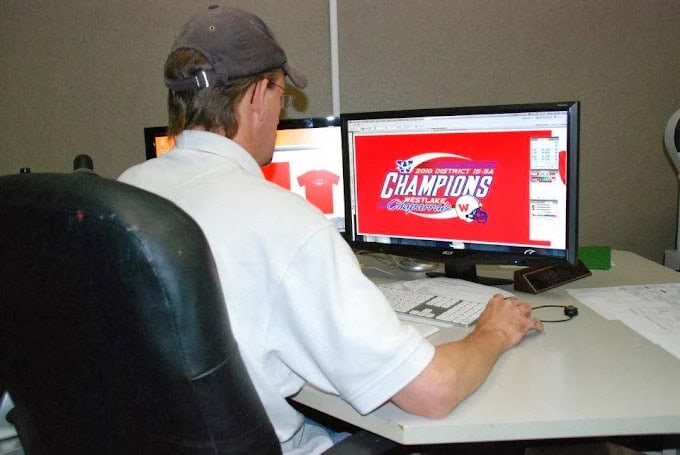
In-house digitizing provides better quality control. Our Art Director Chuck Egger and design team digitize files specifically for our embroidery equipment. They understand our machine capabilities, thread inventory, and fabric handling characteristics. This knowledge produces more reliable results than generic digitizing services.
Faster revisions mean quicker approval cycles. When digitizing happens in-house, design modifications take hours instead of days. If your logo needs adjustment for embroidery production, our team can make changes and provide new samples without external vendor delays.
Better communication prevents misunderstandings. Our digitizing team works directly with customers to understand design intent and fabric applications. They can explain why certain modifications improve embroidery quality and suggest alternatives that preserve your brand identity while working within technical limitations.
Consistent results across reorders. Our digitizing files stay in your customer record for easy reordering. The same stitch file produces identical results on future orders, ensuring brand consistency across different production runs.
How to Get the Best Results from Your Embroidery Order
Proper preparation and communication improve your embroidery results regardless of design complexity.
Provide vector artwork when possible. Clean vector files (AI, EPS, PDF) give our digitizing team the best starting point for creating quality stitch files. If you only have raster artwork, provide the highest resolution available – minimum 300 DPI at actual embroidery size.
Communicate fabric and garment types during quoting. Polo shirts require different digitizing approaches than sweatshirts or hats. Stretch fabrics need special consideration for stitch density and underlay patterns. This information helps our team prepare appropriate stitch files.
Understand stitch count impacts on pricing. Complex designs with high stitch counts take longer to embroider and may cost more than simpler versions. Our digitizing team can suggest modifications that reduce stitch counts without compromising design quality.
Plan for color limitations and thread matching. Thread manufacturers produce hundreds of colors, but exact Pantone matches aren’t always available. Our team maintains color cards showing available thread options and can suggest the closest matches for your brand colors.
Frequently Asked Questions
How long does digitizing take for a new design?
Most logo digitizing completes within 1-2 business days, depending on design complexity. Simple text or basic logos often finish same-day. Complex designs with multiple elements or size variations may take longer. Our in-house digitizing team works directly with production scheduling to minimize delays.
Can you digitize from low-resolution artwork?
Our digitizing team can work with low-resolution files, but results improve significantly with clean vector artwork. Very small or blurry images may require vector recreation before digitizing, which adds 1-2 business days to the timeline but produces much better embroidery quality.
Why do some designs need modification for embroidery?
Thread has physical limitations that don’t apply to printed artwork. Fine details may disappear, small text becomes unreadable, and complex color gradients can’t be reproduced. Our digitizing team suggests modifications that preserve design intent while working within embroidery constraints.
How much does digitizing cost for custom designs?
Digitizing fees vary based on design complexity and stitch count. Simple logos typically cost less than complex illustrations or designs requiring multiple size variations. Our quoting process includes digitizing costs upfront, so there are no surprise charges. The digitizing file becomes part of your customer record for future reorders.
Do you provide the digitized file to customers?
Digitized stitch files remain our property since they’re created specifically for our equipment and production processes. However, customers receive detailed proofs showing exactly how their design will look when embroidered, and we maintain files for easy reordering without additional digitizing charges.
Ready to see how professional digitizing transforms your logo into quality embroidery? Our embroidery team handles everything from file review to final production, ensuring your custom apparel meets exact specifications.