Why a Custom Art Portfolio Is Your Most Important Professional Tool
A custom art portfolio is more than a collection of your work—it’s your professional identity in visual form. Whether you’re applying to art school, seeking gallery representation, pitching to clients, or landing your dream design job, your portfolio is often the deciding factor.
Here’s what makes an effective custom art portfolio:
- High-quality visuals – Professional photos or scans of your best work
- Strategic curation – 10-20 strong pieces that tell a cohesive story
- Clear branding – Consistent visual identity across all materials
- Artist statement – A concise explanation of your creative vision
- Contact information – Easy ways for opportunities to reach you
- Format flexibility – Both physical and digital versions for different situations
The right portfolio opens doors. According to industry research, professionals consistently emphasize that your portfolio should showcase depth, fluency, and versatility—it’s both a testament to the work you’ve done and the growth you’ve experienced as an artist.
Physical portfolios make an impression in face-to-face meetings, while digital portfolios reach global audiences 24/7. Many successful artists maintain both, customizing each for specific opportunities and target audiences.
I’m Luke Sanders, CEO of RiverCity Sportswear, where we’ve helped countless artists and students create personalized portfolio bags and cases through custom screen printing and embroidery for over 15 years. Whether you need a professional custom art portfolio case to carry your work to gallery meetings or branded materials that reflect your unique artistic identity, I’ll show you exactly how to create a portfolio that advances your career.
The Foundation: Key Elements of a Compelling Portfolio
A compelling custom art portfolio isn’t just a random assortment of your creations; it’s a carefully constructed narrative designed to captivate your audience and communicate your artistic prowess. At its heart, a strong portfolio is about making an unforgettable first impression. Think of it as your visual resume, but with far more personality and impact.
The primary goal is to showcase your best work in the best possible light. This means prioritizing quality over quantity, ensuring every piece included serves a purpose, and that the overall presentation is seamless and professional. From the moment someone opens your portfolio, they should immediately grasp your unique style, technical skill, and creative vision. We want them to say, “Wow!”
This section will dig into the critical components that transform a simple collection of art into a powerful, career-advancing custom art portfolio. We’ll cover everything from selecting your strongest pieces to articulating your artistic journey, and ensuring your brand shines through every element.
Curating Your Masterpieces: Selecting the Best Artwork
When it comes to selecting artwork for your portfolio, the golden rule is “quality over quantity.” It’s far better to present a tight selection of 10-20 exceptional pieces than a sprawling collection of mediocre ones. Each piece should be a testament to your highest standards and most refined skills.
Consider your audience and your goal. Are you aiming for a gallery that specializes in abstract painting? Then focus on your strongest abstract works. Are you seeking a role as an illustrator for a children’s book publisher? Showcase pieces that demonstrate your ability to tell stories and create engaging characters. Your portfolio should tell a cohesive story about who you are as an artist, even if it demonstrates a range of skills. It’s about showing consistency in your excellence, not just versatility.
A common best practice is to start and end your portfolio with your absolute strongest pieces. These are the “wow” moments that grab attention immediately and leave a lasting impression. The pieces in between should maintain that high standard, demonstrating your technical fluency, creativity, and unique artistic voice. A portfolio is a reflection of your growth and depth; each project contributes to your evolution as an artist.
Telling Your Story: The Artist Statement and Bio
Your artwork speaks volumes, but sometimes, a little narrative can tie everything together beautifully. An artist statement and bio are crucial components of your custom art portfolio, providing context and a deeper understanding of your work.

An artist statement is a concise written explanation of your work, your process, and the ideas behind your art. It helps viewers connect with your pieces on a more intellectual or emotional level. What inspires you? What techniques do you employ? What message do you hope to convey? Keep it brief, typically 100-200 words, and write it in the first person, as if you’re speaking directly to the viewer.
Your artist bio, on the other hand, is a brief professional summary of your background, education, achievements, and aspirations. This is where you might mention any exhibitions, awards, or significant commissions. It’s usually written in the third person and provides credibility. Both should be clear, compelling, and free of jargon. They define your artistic voice and help clients and galleries understand the human behind the art.
Professional Presentation: Branding and Contact Info
Just as important as the art itself is how you present it. Consistent branding across your entire custom art portfolio—whether physical or digital—reinforces your professional identity. This includes a cohesive visual identity, such as a logo or wordmark, consistent color schemes, and typography that complements your artistic style. When we help artists and businesses in San Marcos, Austin, and across Central and South Texas with custom screen printing, we emphasize how a consistent brand image lifts perception.
Every element, from the font on your website to the design of your business card, should feel like an extension of your artistic work. This attention to detail signals professionalism and a strong sense of self. For a great example of an artist with strong branding, you can check out this artist’s great branding.
Equally vital is clear and accessible contact information. Make it incredibly easy for potential clients, galleries, or employers to reach you. This means having a dedicated contact page on your website, listing your professional email address, and including relevant social media links (like Instagram or LinkedIn). Don’t make them search for it; an opportunity lost due to a hidden contact form is a frustrating experience for everyone!
Choosing Your Canvas: Physical vs. Digital Portfolios
In today’s diverse art world, artists have more options than ever for showcasing their work. The choice between a physical and a digital custom art portfolio isn’t always an either/or situation; often, the most successful artists leverage both to maximize their reach and impact. Each format offers distinct advantages, making them suitable for different scenarios and audiences.
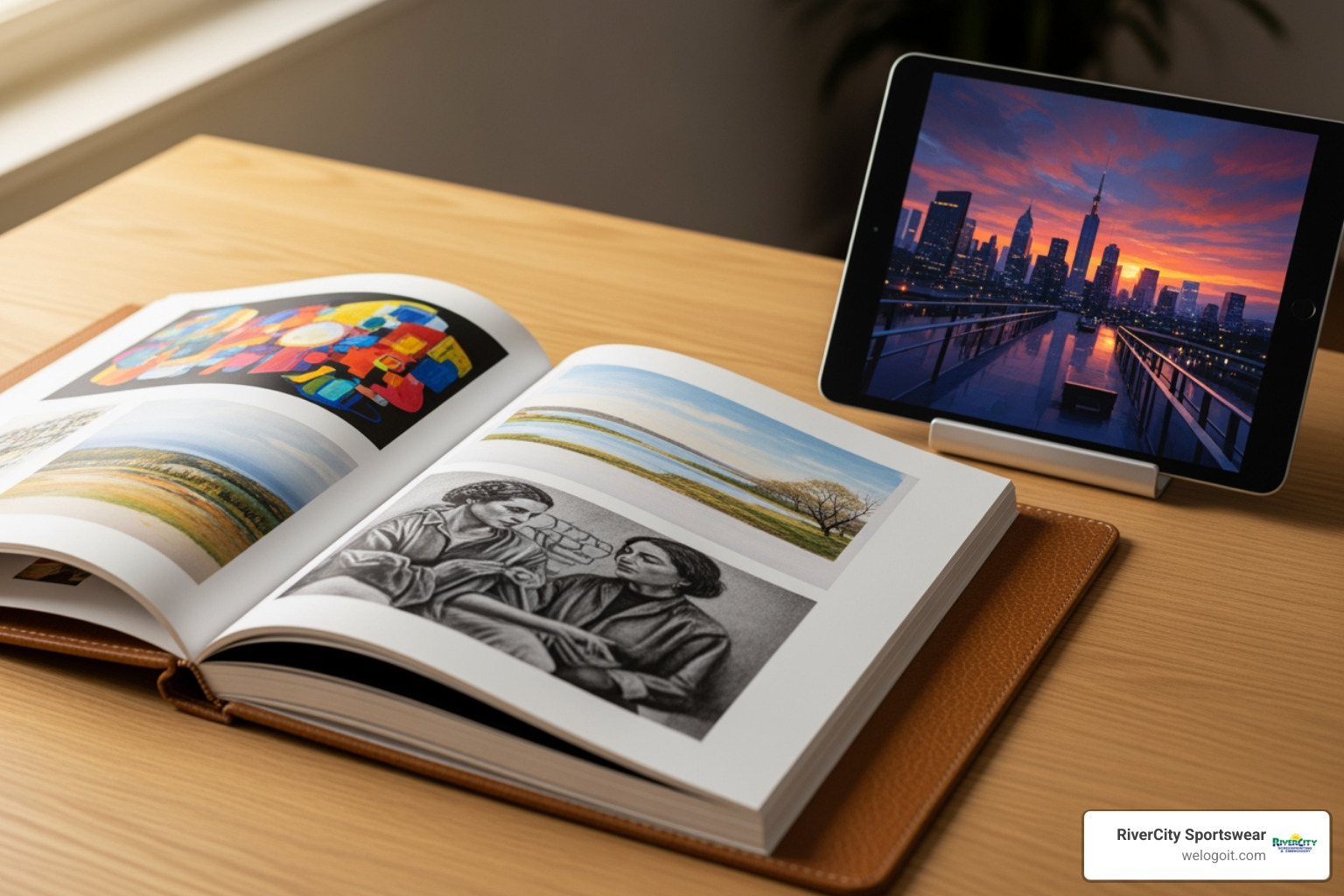
A physical portfolio offers a tangible, immersive experience. There’s something undeniably powerful about seeing original prints or high-quality reproductions in person, feeling the texture of the paper, and appreciating the scale. These are ideal for intimate settings like in-person interviews, gallery submissions, or client meetings. They convey a sense of professionalism and dedication that digital formats sometimes struggle to replicate.
However, the global reach of digital portfolios is best. An online portfolio can be accessed by anyone, anywhere, at any time. It’s your 24/7 storefront, allowing you to connect with an international audience of collectors, curators, and collaborators. This accessibility is crucial in our digital-first world, where many initial contacts and opportunities begin online. Understanding when and how to deploy each format is a strategic decision that can significantly advance your career.
The Tangible Touch: Crafting a Physical Custom Art Portfolio
There’s a certain gravitas that a physical custom art portfolio commands. Holding a beautifully bound book or flipping through carefully presented prints can create a powerful connection with your audience. This tangible touch is especially valuable in face-to-face interactions, where you want to make a memorable, personal impression.
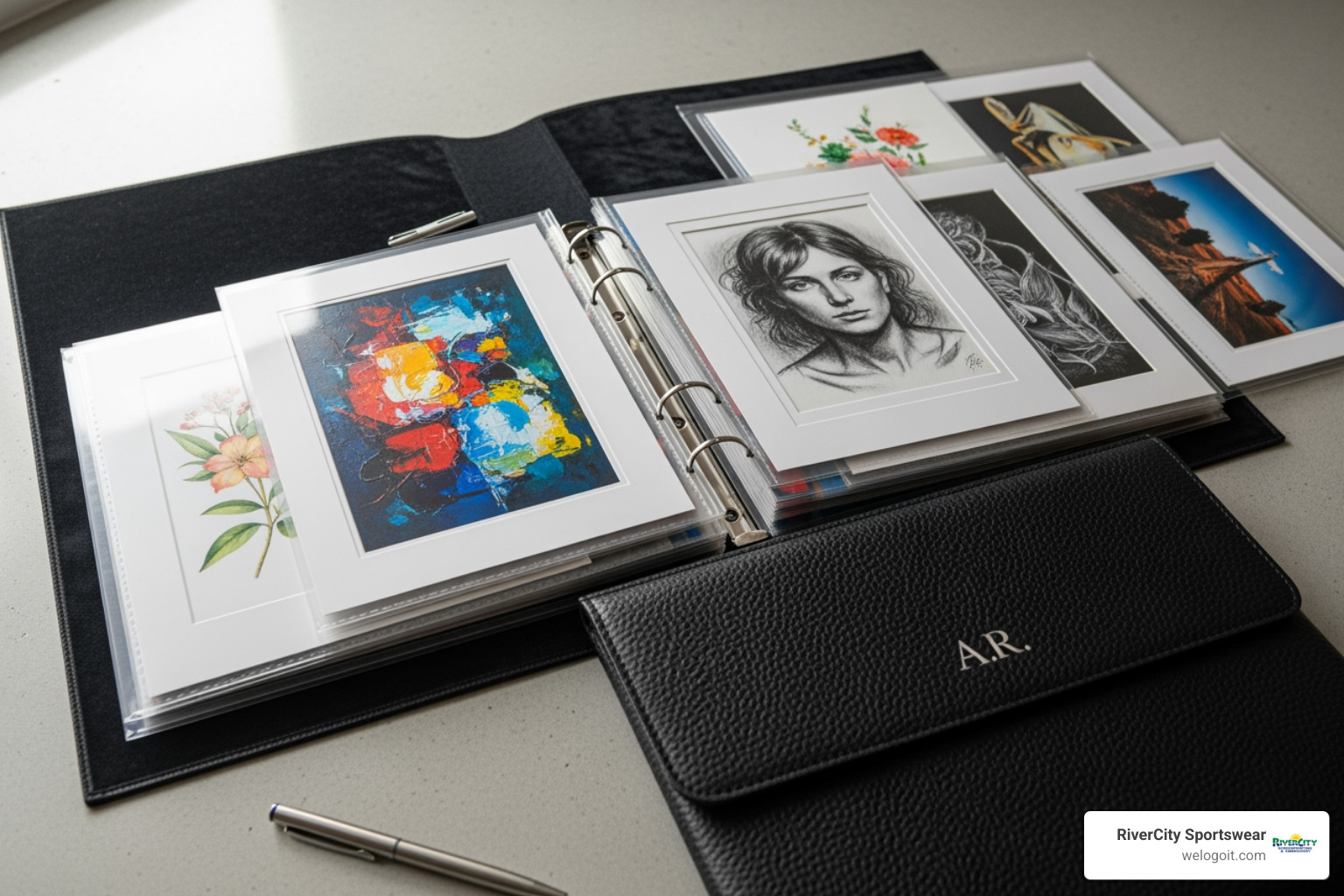
When creating a physical portfolio, quality is paramount. Invest in durable portfolio binders, such as those from Itoya or Prat, which are renowned for their acid-free polypropylene construction and multi-ring mechanisms that won’t snag pages. We’ve seen over 41 products available in the Portfolios and Binders category, offering a wide range of options to suit various needs. Acid-free materials are crucial for protecting your artwork from degradation over time. High-quality prints of your work ensure that colors are accurate and details are sharp, reflecting the true essence of your originals.
Custom printed books, like those offered by services such as Blurb, provide an neat and professional way to present your work. Blurb offers options for printing anywhere from 1 to 1,000 copies, allowing you to create impressive, large-format books or smaller “leave-behind” versions for clients. These books can be designed with custom layouts, and even feature layflat paper for seamless spreads, giving them a high-end feel.
For artists and students in Texas, especially around our locations in San Marcos and Austin, we often see the need for practical, yet personalized, ways to transport their physical portfolios. This is where RiverCity Sportswear shines. We can help you personalize portfolio cases and bags with custom screen printing, adding your logo, artist name, or unique design. This not only protects your valuable work but also extends your brand, making a statement even before your portfolio is opened. Imagine walking into a gallery meeting with a custom-branded bag that complements the art inside – that’s a professional touch that truly stands out.
The Digital Domain: Building an Online Portfolio Website
In today’s interconnected world, an online custom art portfolio is not just an option—it’s a necessity. It acts as your primary digital storefront, accessible 24/7 to potential clients, galleries, and collaborators worldwide. For artists, this means an unparalleled opportunity to showcase their talent and expand their reach far beyond their local community in Central or South Texas.
A professional website plays a critical role in presenting your work. It offers you complete control over your brand, presentation, and content, distinguishing you from artists who rely solely on social media or third-party platforms. Platforms like Portfoliobox and Crevado are excellent starting points for building an online portfolio, offering user-friendly interfaces and robust features without requiring any coding knowledge. Portfoliobox, for instance, offers over 20,000 templates, allowing artists to create a visually stunning site that aligns with their unique style. They even provide a free custom domain and email address with their Pro and Plus packages, adding a layer of professionalism to your online presence.
When building your digital portfolio, consider these essential elements:
- Template Selection: With thousands of templates available, choose one that highlights your artwork effectively. Look for clean, minimalist designs that put your art front and center.
- Custom Domain Name: A personalized domain (e.g., yourname.com) makes your site memorable and professional.
- SEO for Artists: Optimize your site with relevant keywords and descriptions so that search engines can find your work. This is how artists make their portfolios findable, attracting organic traffic.
- Mobile-First Design: A significant portion of your audience will view your portfolio on mobile devices, so ensure your site is responsive and looks great on all screen sizes.
- Fast Loading Times: High-quality images can slow down a site. Optimize your images for the web to ensure quick loading times, preventing potential viewers from clicking away.
Here’s a list of essential pages for an artist’s website:
- Homepage: A captivating entry point that immediately showcases your best work.
- Gallery/Portfolio: Organized sections for different series, mediums, or projects. You can see many examples on Portfoliobox’s artist examples page or Crevado’s artist portfolio examples.
- About: Your artist statement and bio, offering insights into your journey and process.
- Contact: Clear and easy-to-find contact information.
- Store: If you sell prints or original art, an integrated e-commerce section (Portfoliobox allows this with no commission fees).
By carefully crafting your digital presence, you’re not just creating a website; you’re building a dynamic platform that supports your career growth and connects you with opportunities globally.
How to Create Your Custom Art Portfolio: A Step-by-Step Guide
Creating a custom art portfolio can feel like a monumental task, but by breaking it down into manageable steps, you’ll find the process much more approachable. This practical guide is designed for artists at any stage of their career, from emerging talents to seasoned professionals. We’ll walk you through the journey, ensuring your portfolio is not just a collection of pieces, but a powerful tool for advancement.
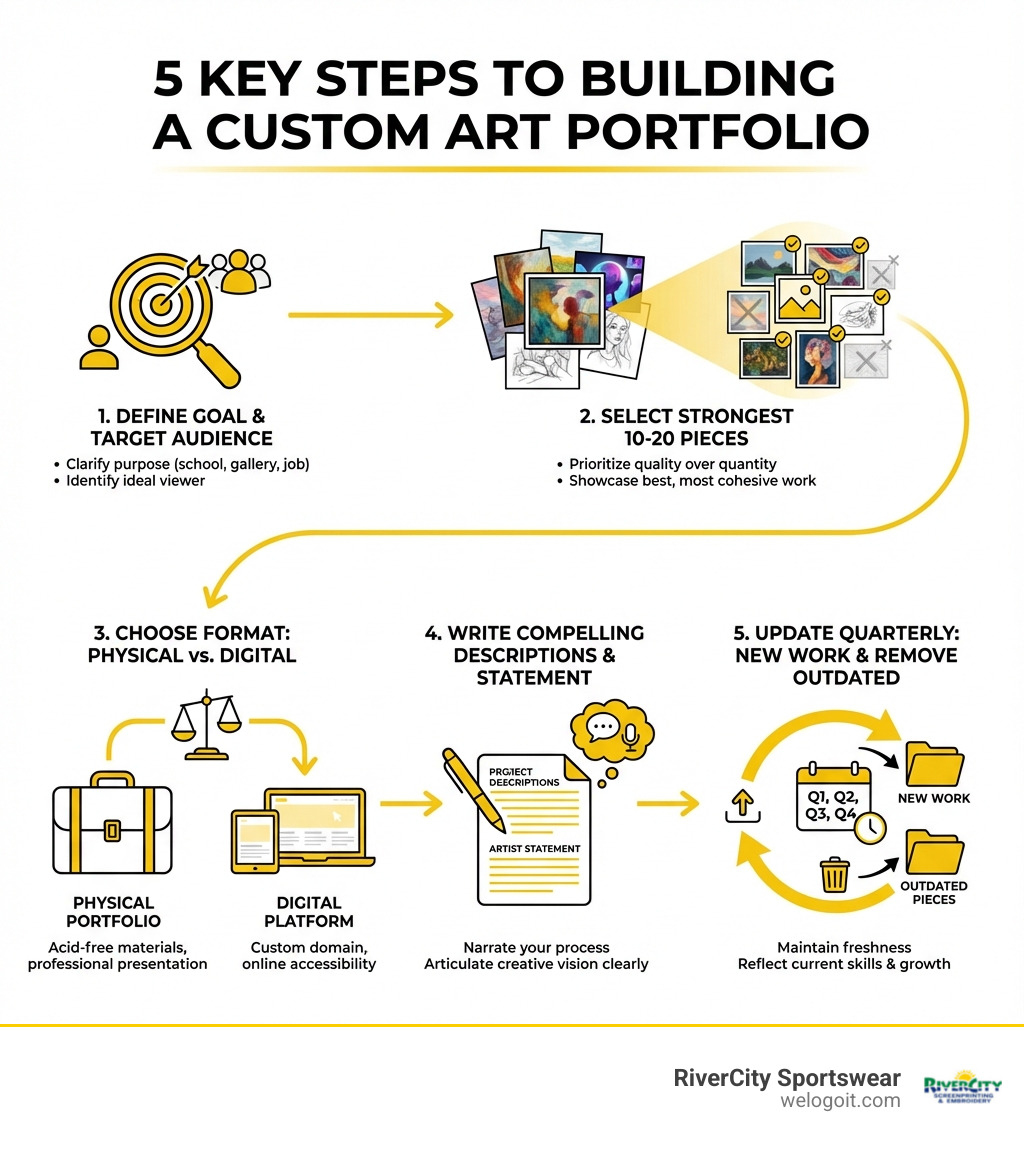
Step 1: Define Your Goal and Audience
Before you even think about selecting your first piece of art, pause and ask yourself: What is the purpose of this portfolio? Who is your target audience? The answers to these questions will profoundly influence every subsequent decision you make.
Are you applying to art school in Texas, seeking gallery representation in Austin, attracting freelance clients for commissions, or landing a design job? Each goal requires a different emphasis and curation strategy. For example, a portfolio for art school might showcase a broader range of skills and experimental work, while one for a commercial client like RiverCity Sportswear (for a custom design project) would focus on pieces that demonstrate your ability to meet specific briefs and collaborate effectively.
Tailoring your work to the viewer is crucial. An art commission, as one artist beautifully puts it, is “a culmination of two separate visions (client’s and artist’s) that meld into one work.” Your portfolio should anticipate the needs and expectations of your audience, presenting them with exactly what they’re looking for, or even better, what they didn’t know they were looking for!
Step 2: Select and Digitize Your Artwork
This is where your chosen masterpieces come into play. Quality over quantity. Select only your strongest, most relevant pieces—typically 10-20 works that best represent your current skill set and artistic direction.
Once selected, the next critical step is to digitize them professionally. High-resolution photography or professional scanning is non-negotiable. Poor-quality images can drastically diminish the impact of your artwork, no matter how brilliant the original.
Ensure consistent lighting and accurate color correction. You want your digital representations to be as true to life as possible. If you’re photographing 3D works like sculptures, capture multiple angles and detail shots. For digital art, export your files at the highest possible resolution. Finally, practice proper file naming and organization. This might seem minor, but it demonstrates professionalism and makes managing your assets much easier.
Step 3: Choose a Format and Build Your Portfolio
With your artwork digitized and goals defined, it’s time to build your custom art portfolio. This involves deciding on your primary format (physical, digital, or both) and then bringing it to life.
For digital portfolios, website templates are your best friend. With over 20,000 templates available for portfolio creation on platforms like Portfoliobox, you have a wealth of options. Choose a template that offers clean layout options, whether it’s a grid, full-screen display, or a more dynamic puzzle-style arrangement. Focus on user experience (UX) – your portfolio should be intuitive to steer and visually engaging.
If you’re assembling a physical book, consider using a service like Blurb to create a high-quality, printed portfolio. For carrying these physical works, remember RiverCity Sportswear can provide custom screen-printed portfolio bags, offering a unique and branded way to transport your art. This kind of personalization ensures your presentation is cohesive from the moment you arrive.
Step 4: Write Compelling Descriptions and Your Bio
We’ve touched on this before, but it’s worth reiterating and expanding upon as a distinct step. Each piece in your custom art portfolio deserves a compelling description. This isn’t just a caption; it’s an opportunity to provide project context, detailing the medium, dimensions, and year of creation. More importantly, it’s a chance to share your creative process, any challenges you overcame, or the story behind the piece.
Storytelling adds depth and allows your audience to connect more deeply with your work. For instance, if you designed a logo for a local Austin business, explain the client’s brief, your design philosophy, and how the final product addressed their needs.
Alongside your individual piece descriptions, ensure your artist statement and bio are polished. Proofread everything carefully for typos and grammatical errors. A poorly written statement can undermine the professionalism of even the most stunning artwork. This textual content humanizes your portfolio, offering a window into your mind and method.
Avoiding Common Pitfalls and Keeping Your Portfolio Fresh
A custom art portfolio is not a static document; it’s a living, breathing representation of your artistic journey. It requires regular maintenance, thoughtful updates, and a keen eye for improvement. Ignoring it can lead to missed opportunities and a stagnant professional image. This section will highlight common mistakes artists make and provide strategies to keep your portfolio dynamic and relevant throughout your career.
Common Portfolio Mistakes to Avoid
Even seasoned artists can fall into traps when curating their portfolios. Being aware of these pitfalls can save you time and ensure your portfolio always makes the best impression:
- Including weak or unfinished work: This is perhaps the most common mistake. Every piece in your portfolio should be a shining example of your best work. If it’s not excellent, leave it out. As we mentioned, quality always trumps quantity.
- Poor quality images or scans: Blurry photos, inconsistent lighting, or inaccurate colors can severely detract from your art. Invest in professional photography or learn to do it yourself properly.
- Typos and grammatical errors: Nothing screams “unprofessional” louder than mistakes in your artist statement or project descriptions. Proofread, then have someone else proofread.
- Inconsistent branding: Your logo, fonts, and color palette should be consistent across all elements of your portfolio, both physical and digital. This helps establish a recognizable professional identity.
- No clear call to action: What do you want your viewer to do after seeing your work? Contact you? Visit your store? Make it explicit and easy to do.
- Outdated information: A portfolio with old contact details, irrelevant projects, or a bio that hasn’t been updated in years suggests a lack of engagement with your career.
The Living Portfolio: How to Stay Relevant
To ensure your custom art portfolio continues to open doors, treat it as a dynamic entity that evolves with your skills and career path. Here’s how to keep it fresh and impactful:
- Quarterly Reviews: Schedule regular check-ins, perhaps every three months, to assess your portfolio. What new work have you created? Has your style evolved?
- Adding New Projects: As you complete significant pieces or projects, integrate them into your portfolio. This demonstrates ongoing creativity and skill development.
- Archiving Older Work: Be ruthless. If a piece no longer represents your best work or current direction, move it to an archive. You don’t have to delete it forever, but it shouldn’t be front and center.
- Seeking Feedback from Peers: Fresh eyes can spot things you might miss. Ask trusted mentors or fellow artists for constructive criticism.
- Tracking Website Analytics: If you have an online portfolio, pay attention to analytics. Which pages are most visited? How long do people stay? This data can offer insights into what resonates with your audience.
A portfolio should be a living document, constantly updated with new work. For an excellent example of a well-maintained and evolving portfolio, you can see a well-maintained portfolio. By actively managing and refining your portfolio, you ensure it always reflects your best self as an artist.
Frequently Asked Questions about Custom Art Portfolios
We understand that creating a custom art portfolio can bring up many questions. Here are some of the most common ones we hear, along with our expert advice.
How many pieces should I include in my art portfolio?
The general rule is to include 10-20 of your absolute best and most recent pieces. While it might be tempting to showcase everything you’ve ever created, quality always trumps quantity. Decision-makers often have limited time, and you want every piece they see to be impactful. Tailor the number based on the specific application or audience. For a quick online review, 10-15 might be ideal, while a physical portfolio for a gallery might allow for closer to 20. The goal is to leave them wanting more, not overwhelmed.
Should I have more than one portfolio?
Yes, it’s highly recommended to have more than one custom art portfolio. Just as a musician might have different setlists for different venues, you should create specialized portfolios for various goals and audiences. For example, you might need one portfolio custom for commercial illustration clients, highlighting your ability to meet briefs and deliver specific styles. Another portfolio could be curated for fine art gallery submissions, focusing on your personal vision and conceptual depth. Having multiple portfolios allows you to present the most relevant and impactful work for each unique opportunity.
How do I effectively showcase my unique style through my portfolio?
Showcasing your unique style is central to creating a compelling custom art portfolio. This is achieved through consistent curation and thoughtful presentation. Select pieces that collectively represent your core aesthetic, recurring themes, and preferred mediums. Your chosen works should feel cohesive, even if they demonstrate a range of skills.
Beyond the art itself, your branding plays a crucial role. Use consistent color schemes, typography, and a logo or wordmark across your physical and digital portfolios. This visual consistency helps viewers recognize and remember your unique artistic identity. Finally, your artist statement is key to articulating your unique perspective, explaining your inspirations, techniques, and the underlying philosophy of your work. It’s your voice, guiding the viewer through your visual world.
Conclusion
A well-crafted custom art portfolio is, without a doubt, your most powerful career tool. It’s not merely a collection of your work; it’s a dynamic, personalized statement that showcases your talent, defines your professional brand, and opens doors to new opportunities. Whether you choose the tangible elegance of a physical portfolio or the expansive reach of a digital one, personalization is key to standing out in a crowded creative landscape.
From the meticulous curation of your masterpieces to the thoughtful articulation of your artistic vision in your artist statement, every element of your portfolio contributes to the overall impression you make. And remember, your portfolio is a living document, requiring ongoing attention to remain fresh, relevant, and impactful as your career progresses.
Here at RiverCity Sportswear, we understand the importance of making a lasting impression. For artists and students across San Marcos, Austin, Central Texas, and South Texas, we offer unique, high-quality custom bags and cases designed to carry and protect your physical portfolio. Our personalized design support and fast turnaround times mean we can help bring your vision to life, ensuring your presentation is polished from every angle.
Start creating your custom screen-printed portfolio bag today and let your portfolio speak volumes about your artistic journey.