If you’re ordering custom apparel for your business, team, or event, one of the first decisions you’ll face is deciding between screen printing and embroidery. Both are proven custom t-shirt decoration methods, but they produce very different results. The right choice depends on your design, the garments you’re using, how many you need, and what you’re willing to spend.
At RiverCity Screenprinting & Embroidery in San Marcos, TX, we handle both methods daily for clients across the Austin to San Antonio corridor. Here’s what we’ve learned about when each option makes the most sense.
Table of Contents
How Screen Printing Works
Screen printing pushes ink through a stenciled mesh screen onto fabric. Each color in your design requires a separate screen and a separate pass through the press. The result is a smooth, flat print that sits on top of the fabric rather than being sewn into it.
This method can produce bold, vivid colors and works well for designs with clean lines, solid fills, and large graphics. If you’ve ever worn a concert tee or a company fun-run shirt, there’s a good chance it was screen printed.
Where Screen Printing Shines
Large and detailed designs. Screen printing handles big graphics easily. You can cover the entire front or back of a shirt without adding weight or bulk. That makes it ideal for event shirts, band merch, or any project where the design is the main attraction.
Bulk orders. The setup cost for screen printing (creating the screens, mixing inks) is fixed, so the per-unit cost drops significantly as your order size increases. If you’re ordering 50, 100, or 500 shirts, bulk order screen printing is almost always the more cost-effective route.
Cotton and lightweight fabrics. Screen printed designs feel soft against the skin, especially with water-based or discharge inks. They don’t add stiffness or weight, which is why screen printing on cotton t-shirts, tank tops, and hoodies is the industry standard. Polyester screen printing is also possible, though it requires special inks (like polyester-friendly plastisol or sublimation) to prevent dye migration.
Screen Printing Limitations
Color count affects cost. Every color in your design needs its own screen. A one-color logo is cheap. A six-color design costs more and takes longer to set up. Designs with too many colors can also start to look muddled as ink layers build up on the fabric.
Durability over time. Screen printed shirts are more susceptible to wear from regular washing. If you wash them inside-out on a gentle cycle, they’ll last. But toss them in hot water with everything else, and you’ll start seeing fading and cracking within a few months. The print sits on top of the fabric, so it’s exposed to friction and heat every wash cycle.
Not great for very small runs. Because of the fixed setup costs (screens, ink prep), ordering just 6 or 12 shirts at screen-printed prices doesn’t always pencil out.
How Embroidery Works
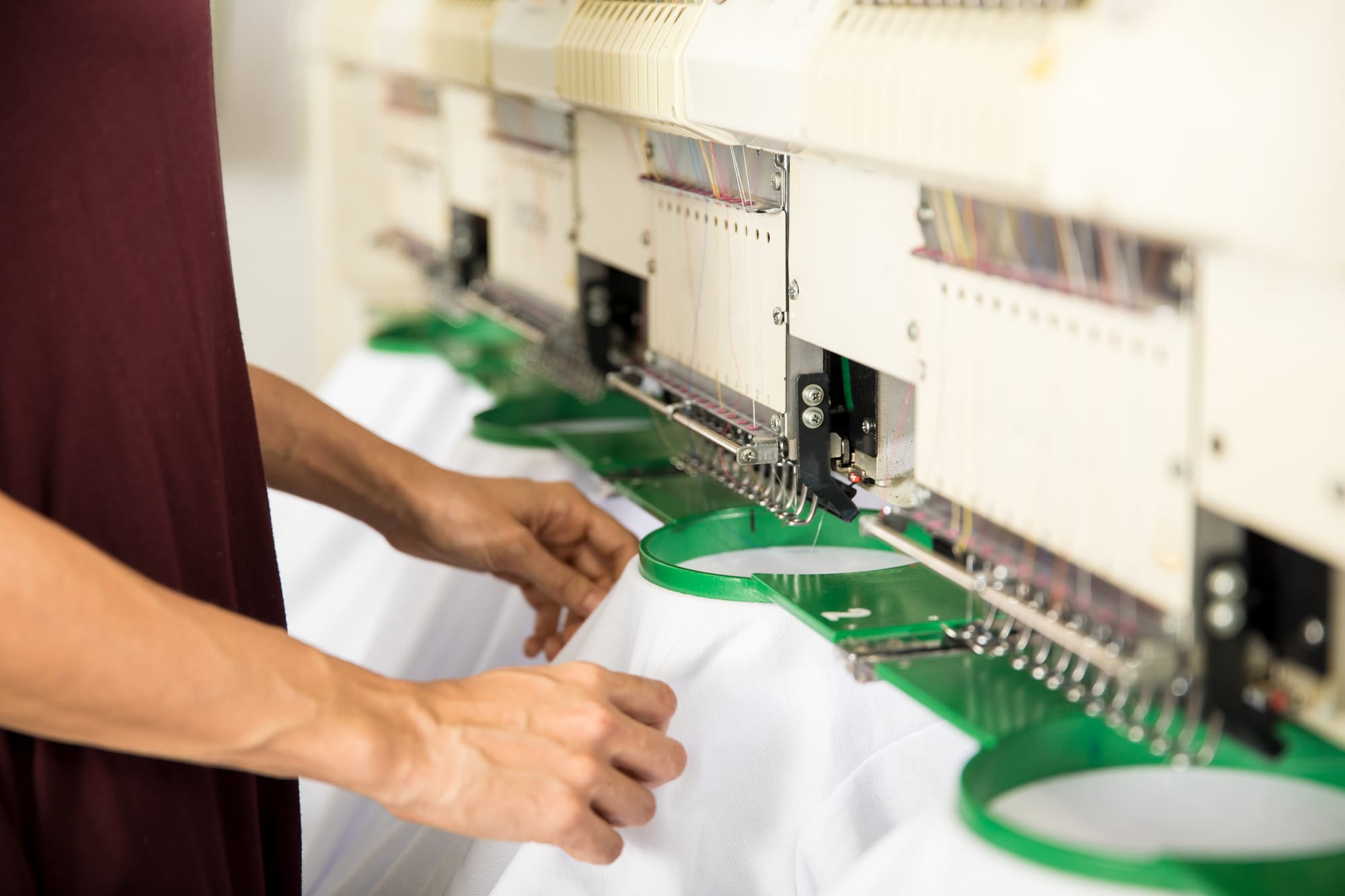
Embroidery stitches thread directly into the fabric using a computerized machine that follows your digitized design file. The thread becomes part of the garment itself, creating a textured, raised look that you can feel with your fingers.
This is one of the oldest and most respected methods of customizing apparel. There’s a reason corporate uniforms, golf shirts, and premium outerwear almost always use embroidery: it looks polished and professional in a way that’s hard to replicate with ink.
Where Embroidery Shines
Professional and corporate apparel. Small logo embroidery on the left chest of a polo shirt or button-down is the gold standard for business wear. It communicates quality. Employees wearing embroidered uniforms look put-together, and customers notice.
Heavier fabrics. Cotton embroidery works beautifully on heavyweight materials like jackets, beanies, canvas bags, and structured caps. The fabric supports the thread weight without puckering or distortion. If you’re decorating outerwear or headwear, embroidery is usually the best call.
Durability. This is where embroidery really pulls ahead. Because the thread is stitched into the fabric, it doesn’t crack, peel, or fade the way screen printing can. An embroidered polo will look just as sharp after 100 washes as it did on day one. For workwear, uniforms, and anything that gets laundered hard, embroidery holds up.
Color flexibility on small designs. Here’s something that surprises people: embroidery can handle a lot of colors without increasing cost. Many embroidery shops (including ours) can stitch 12 or more thread colors into a design before there’s any price change. With screen printing, every additional color adds cost. So if you have a detailed, multicolor logo going on a hat or polo, embroidery might actually be cheaper.
Embroidery Limitations
Size constraints. Large embroidered designs get heavy and stiff. A full-chest embroidered graphic on a t-shirt would be uncomfortable to wear and expensive to produce. Embroidery works best for logos and designs that are roughly 3 to 4 inches wide, sometimes up to pocket-size or cap-front size.
Thin or stretchy fabrics. The needle punctures and thread weight can cause lightweight fabrics to pucker, stretch, or even tear. V-necks, performance tees, and other thin materials generally aren’t good candidates for embroidery. You’ll get a much cleaner result with screen printing on those garments.
Cost on large orders. Embroidery pricing is often based on stitch count (the number of stitches the machine makes to complete your design) or a flat rate by design size. Unlike screen printing, the per-unit savings on large orders aren’t as dramatic. Ordering 200 embroidered polos costs more per piece than 200 screen printed t-shirts.
Screen Printing vs. Embroidery: A Side-by-Side Comparison
Here’s a quick breakdown of how these two custom apparel decoration methods stack up:
Best fabric types: – Screen printing: Cotton tees, hoodies, tank tops, lightweight blends, polyester (with specialty inks) – Embroidery: Polos, jackets, caps, heavyweight cotton, canvas bags
Design size: – Screen printing: Small to full-coverage (front, back, sleeves) – Embroidery: Small to medium (logos, left chest, caps)
Color handling: – Screen printing: Each color adds cost; best with 1 to 4 colors – Embroidery: 12+ colors with minimal cost increase
Durability: – Screen printing: Good with proper care; fades and cracks over time – Embroidery: Excellent; thread is part of the fabric
Cost for bulk orders: – Screen printing: Very cost-effective at scale – Embroidery: Moderate savings at scale; higher per-unit cost
Cost for small orders: – Screen printing: Higher due to setup fees – Embroidery: More competitive for small runs
Look and feel: – Screen printing: Smooth, flat, bold colors – Embroidery: Textured, raised, professional finish
How to Decide: Picking the Right Method for Your Project
Rather than asking “which is better, screen printing or embroidery?” the real question is: what are you making, and who’s it for?
Choose Screen Printing When:
- You need a large, colorful design on the front or back of a shirt
- You’re placing a bulk order (50+ pieces) and want to keep costs down
- You’re decorating cotton t-shirts, hoodies, or casual wear
- Your design has fine details or photographic elements that wouldn’t translate well to thread
- You need the order fast (screen printing setups are generally quicker)
Choose Embroidery When:
- You want a professional, polished look for business or corporate wear
- Your design is a compact logo (left chest, cap front, sleeve)
- Durability matters more than anything (workwear, uniforms, outdoor gear)
- You’re decorating heavier fabrics like polos, jackets, or structured caps
- Your logo uses many colors and you want to avoid per-color upcharges
Consider Both:
Some of our best projects at RiverCity use both methods. A restaurant might screen print fun graphics on staff t-shirts but embroider the logo on manager polos. A construction company might embroider logos on heavyweight jackets and screen print safety messages on high-vis cotton tees. Mixing methods lets you match the decoration to the garment and the audience.
Why It Matters for Your Brand
Promotional clothing is one of the most effective ways to get your brand out in the world. Unlike a digital ad that disappears when someone scrolls past, a well-made custom shirt gets worn for years. That’s repeated exposure every time someone puts it on, at the grocery store, a job site, or a weekend barbecue.
But the decoration method affects how long that exposure lasts. A screen printed shirt that cracks and fades after a few months ends up in a donation bin. An embroidered polo that still looks crisp after two years of weekly wear keeps working for your brand. Choosing the right method isn’t just about aesthetics or budget; it’s about getting the most mileage out of every piece you order.
Frequently Asked Questions
What’s the minimum order for screen printing vs embroidery?
Screen printing typically requires at least 12-24 pieces to be cost-effective due to setup fees. Embroidery can be economical for smaller orders, sometimes as few as 6-12 pieces, since there’s no screen setup required.
Which method works better on different shirt materials?
Screen printing excels on cotton, cotton blends, and lightweight fabrics. Embroidery works best on heavier materials like polos, jackets, and structured caps. Performance fabrics and very thin materials should typically be screen printed.
How do I prepare my logo for each decoration method?
Screen printing requires vector files with separated colors for each screen. Embroidery needs digitized files that convert your design into stitch patterns. Many shops can handle the file conversion, but having vector artwork helps both processes.
Which lasts longer, screen printing or embroidery?
Embroidery typically lasts longer since the thread becomes part of the fabric. Screen printed designs can crack or fade over time, especially with hot water washing. Proper care extends the life of both, but embroidery is generally more durable.
Can you combine screen printing and embroidery on the same garment?
Absolutely! Many businesses use embroidered logos for a professional look and screen printed graphics for larger designs or additional information. This combination approach maximizes both visual impact and brand recognition.
Get the Right Recommendation for Your Project
If you’re still not sure which decoration method fits your project better, that’s exactly what we’re here for. At RiverCity Screenprinting & Embroidery in San Marcos, we work with businesses, teams, nonprofits, and event organizers across Central Texas every day. We’ll look at your design, talk through your goals, and recommend the method (or combination of methods) that gives you the best result for your budget.
Ready to get started? Contact RiverCity Screenprinting & Embroidery for a free quote, or explore our screen printing services and embroidery options to see what we can do for your project.